Smart Farming of the Future: How Machine Technology and Automation Are Feeding the Growing Global Population
White Wang
•
September 19, 2025
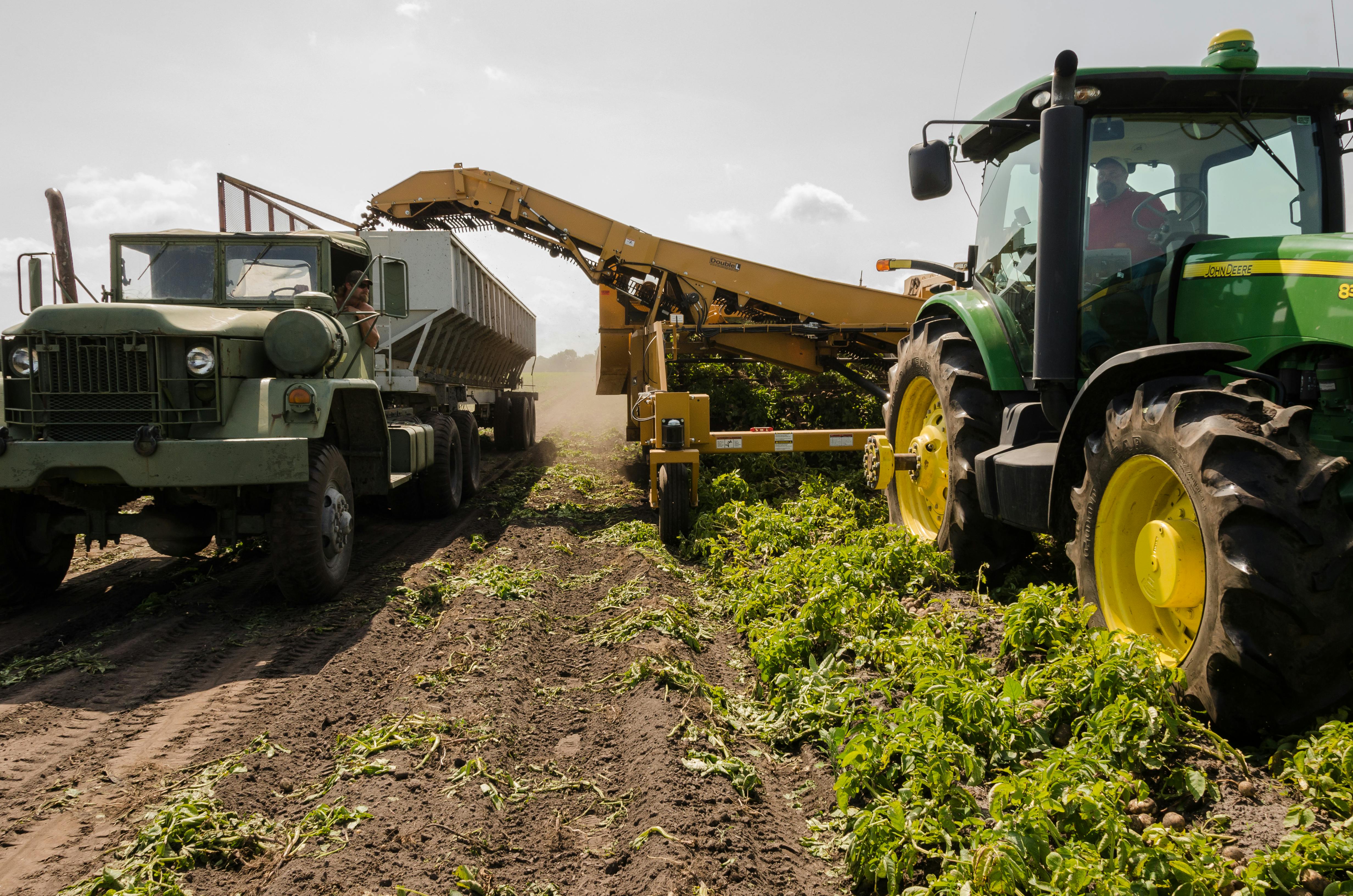
By 2050, the global population is projected to soar to nearly 10 billion people. This demographic explosion presents a monumental challenge: how do we feed a world of 10 billion with finite—and in some cases, dwindling—natural resources? Traditional farming, which relies on vast tracts of land, massive water consumption, and chemical inputs, is struggling to keep pace. The soil is becoming less fertile, climate change is making weather patterns more volatile, and labor shortages are a critical issue in many agricultural regions.
The answer to this Malthusian dilemma is not simply to farm more, but to farm smarter. We are at the dawn of a new agricultural revolution, one driven not by the plow or the pesticide, but by data, machine technology, and automation. This is the era of Smart Farming, a high-tech, data-driven approach to agriculture that is fundamentally reshaping how we grow food.
Precision Agriculture: The "Brain" of the Smart Farm
The core concept behind smart farming is precision agriculture. The old way of farming treated a 1,000-acre field as a single, uniform entity. The new way, powered by machine technology, treats that same field as a million individual data points, each with unique needs. This allows for the precise application of resources—water, fertilizer, and pesticides—only where they are needed, when they are needed.
This is made possible by a trifecta of technologies: the "nervous system" (IIoT), the "brain" (AI), and the "muscles" (Robotics).
1. The "Nervous System": IIoT and Data Collection
The foundation of any smart farm is its data. The Industrial Internet of Things (IIoT) provides the "senses" for the farm, blanketing it in a network of intelligent sensors that collect a constant stream of real-time information.
In the Soil: IoT sensors monitor critical data like soil moisture, temperature, pH, and nutrient content. This allows a farmer to know, on a foot-by-foot basis, which parts of their field are dry and which are nutrient-deficient.
In the Air: Drones and unmanned aerial vehicles (UAVs) act as the farm's "eyes in the sky." Equipped with multispectral or thermal cameras, they can autonomously scan thousands of acres, identifying crop stress, pest infestations, and irrigation leaks long before they would be visible to the human eye.
On the Livestock: For animal agriculture, wearable biometric sensors are attached to cattle to monitor their health, location, and even their feeding habits, allowing for the early detection of illness and optimizing herd management.
2. The "Brain": AI and Predictive Analytics
A farm can generate terabytes of data a day. By itself, this data is just noise. Artificial Intelligence (AI) is the "brain" that translates this data into actionable, intelligent decisions.
AI-powered platforms analyze the data from soil sensors, drones, and weather forecasts to create a complete digital model of the farm. This enables:
Predictive Forecasting: AI can accurately predict crop yields, forecast pest outbreaks, and model the impact of future weather events, giving farmers the ability to plan ahead.
Intelligent Decision-Making: The AI doesn't just present data; it provides specific recommendations. It can tell a farmer, "The southeast corner of Field B is low on nitrogen," or "Crop stress detected in Field C is consistent with a corn borer infestation."
Computer Vision: This is one of AI's most powerful applications. When mounted on a robot, AI-powered cameras can "see" and understand what they are looking at. They can differentiate a weed from a crop, a ripe strawberry from an unripe one, or a diseased leaf from a healthy one.
The "Muscles" of the Smart Farm: Automation and Robotics
Once the AI brain has made a decision, the new generation of agricultural robots and automated machines executes the plan with surgical precision. This is where the manual labor of farming is being truly redefined.
Autonomous Tractors
The iconic John Deere tractor is no longer just a vehicle; it's a 24/7 autonomous robot. Equipped with high-precision GPS, 360-degree cameras, and AI, these tractors can plow, plant, and till a field with sub-inch accuracy, day or night, with no driver in the cab. This not only solves the critical labor shortage but also optimizes fuel use and ensures every seed is planted in the perfect location for maximum yield.
Intelligent Weeders and Sprayers
The old way to fight weeds was to spray an entire field with herbicide. The smart way is far more precise.
Smart Sprayers: John Deere's "See & Spray™" system uses 36 high-speed cameras to scan 2,100 square feet per second. Its AI instantly identifies weeds and triggers a specific nozzle to spray just that weed, and nothing else. This system has been shown to reduce herbicide use by over 90%, saving money and preventing massive chemical runoff into the environment.
Laser Weeding: Companies like Carbon Robotics have taken this a step further. Their "LaserWeeder" robot rolls through a field using AI to identify 80 different types of weeds. It then, in milliseconds, destroys the weed with a high-power thermal laser, eliminating the need for herbicides entirely.
Robotic Harvesting
Harvesting delicate produce like fruits and vegetables is time-consuming, expensive, and difficult to staff. Intelligent robotics is solving this.
Fruit Pickers: Companies like Agrobot and FFRobotics have developed harvesters for strawberries and apples. These machines use a dozen robotic arms, each guided by AI-powered computer vision, to scan the fruit, identify only the perfectly ripe ones, and gently pick and pack them.
Lettuce Bots: Even a delicate plant like lettuce is being harvested by robots. The "Vegebot," developed at Cambridge University, uses one camera to identify a healthy head of lettuce and a second camera to guide a blade to cut it perfectly at the stem without crushing it.
The Next Frontier: Vertical Farming and Urban Food Security
While smart farming is revolutionizing traditional fields, a new, even more futuristic solution is addressing the problem of land and transportation: Vertical Farming.
Vertical farming is the practice of growing crops in vertically stacked layers inside a fully controlled indoor environment, often in the heart of a city. This method, which typically uses hydroponic (water-based) or aeroponic (mist-based) systems, is entirely reliant on machine technology and automation.
Total Automation: AI controls every aspect of the "growing recipe"—the precise light spectrum from LEDs, the exact 24/7 temperature and humidity, and the nutrient composition of the water.
Massive Yield: By growing 24/7/365 in optimized conditions, vertical farms can produce 10 times the yield per square foot of a traditional farm.
Unprecedented Sustainability: This method uses 95-98% less water than conventional agriculture. Because it's a sealed environment, there is zero need for pesticides or herbicides.
Feeding the City: By growing food inside the city, vertical farms slash the "food miles" required to get produce to consumers. This reduces transportation costs, cuts carbon emissions, and delivers a fresher product that has a longer shelf life.
← Back to Home
The answer to this Malthusian dilemma is not simply to farm more, but to farm smarter. We are at the dawn of a new agricultural revolution, one driven not by the plow or the pesticide, but by data, machine technology, and automation. This is the era of Smart Farming, a high-tech, data-driven approach to agriculture that is fundamentally reshaping how we grow food.
Precision Agriculture: The "Brain" of the Smart Farm
The core concept behind smart farming is precision agriculture. The old way of farming treated a 1,000-acre field as a single, uniform entity. The new way, powered by machine technology, treats that same field as a million individual data points, each with unique needs. This allows for the precise application of resources—water, fertilizer, and pesticides—only where they are needed, when they are needed.
This is made possible by a trifecta of technologies: the "nervous system" (IIoT), the "brain" (AI), and the "muscles" (Robotics).
1. The "Nervous System": IIoT and Data Collection
The foundation of any smart farm is its data. The Industrial Internet of Things (IIoT) provides the "senses" for the farm, blanketing it in a network of intelligent sensors that collect a constant stream of real-time information.
In the Soil: IoT sensors monitor critical data like soil moisture, temperature, pH, and nutrient content. This allows a farmer to know, on a foot-by-foot basis, which parts of their field are dry and which are nutrient-deficient.
In the Air: Drones and unmanned aerial vehicles (UAVs) act as the farm's "eyes in the sky." Equipped with multispectral or thermal cameras, they can autonomously scan thousands of acres, identifying crop stress, pest infestations, and irrigation leaks long before they would be visible to the human eye.
On the Livestock: For animal agriculture, wearable biometric sensors are attached to cattle to monitor their health, location, and even their feeding habits, allowing for the early detection of illness and optimizing herd management.
2. The "Brain": AI and Predictive Analytics
A farm can generate terabytes of data a day. By itself, this data is just noise. Artificial Intelligence (AI) is the "brain" that translates this data into actionable, intelligent decisions.
AI-powered platforms analyze the data from soil sensors, drones, and weather forecasts to create a complete digital model of the farm. This enables:
Predictive Forecasting: AI can accurately predict crop yields, forecast pest outbreaks, and model the impact of future weather events, giving farmers the ability to plan ahead.
Intelligent Decision-Making: The AI doesn't just present data; it provides specific recommendations. It can tell a farmer, "The southeast corner of Field B is low on nitrogen," or "Crop stress detected in Field C is consistent with a corn borer infestation."
Computer Vision: This is one of AI's most powerful applications. When mounted on a robot, AI-powered cameras can "see" and understand what they are looking at. They can differentiate a weed from a crop, a ripe strawberry from an unripe one, or a diseased leaf from a healthy one.
The "Muscles" of the Smart Farm: Automation and Robotics
Once the AI brain has made a decision, the new generation of agricultural robots and automated machines executes the plan with surgical precision. This is where the manual labor of farming is being truly redefined.
Autonomous Tractors
The iconic John Deere tractor is no longer just a vehicle; it's a 24/7 autonomous robot. Equipped with high-precision GPS, 360-degree cameras, and AI, these tractors can plow, plant, and till a field with sub-inch accuracy, day or night, with no driver in the cab. This not only solves the critical labor shortage but also optimizes fuel use and ensures every seed is planted in the perfect location for maximum yield.
Intelligent Weeders and Sprayers
The old way to fight weeds was to spray an entire field with herbicide. The smart way is far more precise.
Smart Sprayers: John Deere's "See & Spray™" system uses 36 high-speed cameras to scan 2,100 square feet per second. Its AI instantly identifies weeds and triggers a specific nozzle to spray just that weed, and nothing else. This system has been shown to reduce herbicide use by over 90%, saving money and preventing massive chemical runoff into the environment.
Laser Weeding: Companies like Carbon Robotics have taken this a step further. Their "LaserWeeder" robot rolls through a field using AI to identify 80 different types of weeds. It then, in milliseconds, destroys the weed with a high-power thermal laser, eliminating the need for herbicides entirely.
Robotic Harvesting
Harvesting delicate produce like fruits and vegetables is time-consuming, expensive, and difficult to staff. Intelligent robotics is solving this.
Fruit Pickers: Companies like Agrobot and FFRobotics have developed harvesters for strawberries and apples. These machines use a dozen robotic arms, each guided by AI-powered computer vision, to scan the fruit, identify only the perfectly ripe ones, and gently pick and pack them.
Lettuce Bots: Even a delicate plant like lettuce is being harvested by robots. The "Vegebot," developed at Cambridge University, uses one camera to identify a healthy head of lettuce and a second camera to guide a blade to cut it perfectly at the stem without crushing it.
The Next Frontier: Vertical Farming and Urban Food Security
While smart farming is revolutionizing traditional fields, a new, even more futuristic solution is addressing the problem of land and transportation: Vertical Farming.
Vertical farming is the practice of growing crops in vertically stacked layers inside a fully controlled indoor environment, often in the heart of a city. This method, which typically uses hydroponic (water-based) or aeroponic (mist-based) systems, is entirely reliant on machine technology and automation.
Total Automation: AI controls every aspect of the "growing recipe"—the precise light spectrum from LEDs, the exact 24/7 temperature and humidity, and the nutrient composition of the water.
Massive Yield: By growing 24/7/365 in optimized conditions, vertical farms can produce 10 times the yield per square foot of a traditional farm.
Unprecedented Sustainability: This method uses 95-98% less water than conventional agriculture. Because it's a sealed environment, there is zero need for pesticides or herbicides.
Feeding the City: By growing food inside the city, vertical farms slash the "food miles" required to get produce to consumers. This reduces transportation costs, cuts carbon emissions, and delivers a fresher product that has a longer shelf life.